Why a Loop Route Feels Different from a Return Along the Same Street
A loop route and a return along the same street suit different rides. Compare effort, street conditions and the finish to choose a shape that fits.
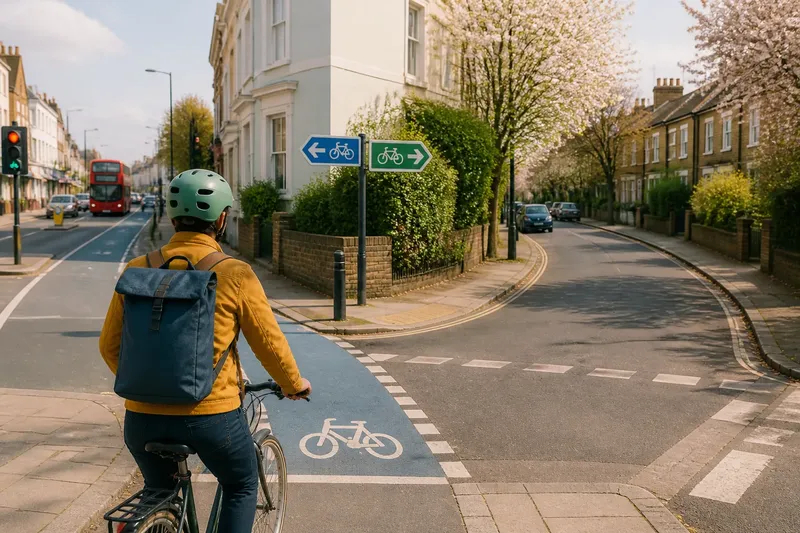
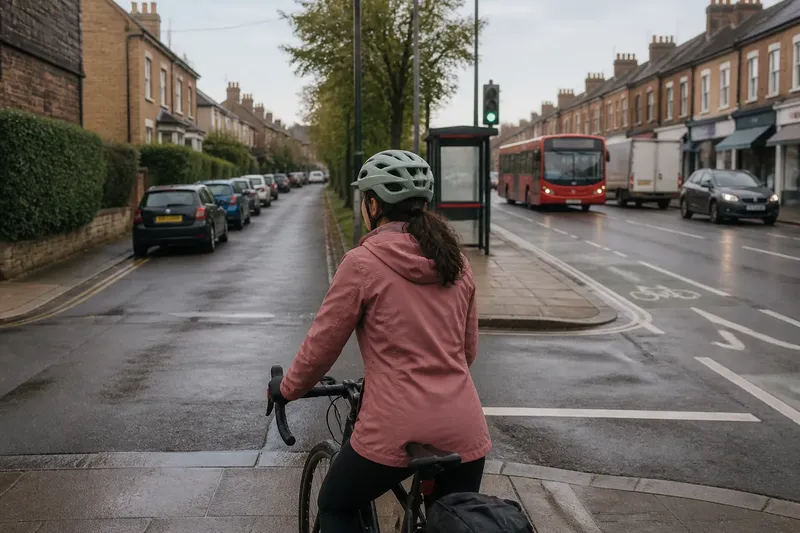
You roll up to a junction where the cycle lane ends, and the route choice suddenly feels practical: turn back along the street you know, or continue round the block. A loop route changes more than the scenery. It changes which junctions you face, where traffic meets you and how much attention the ride asks of you.
For everyday cycling, the useful comparison is not novelty against boredom. It is how each route fits the streets, your energy and the place you need to finish. A loop can avoid repeating a difficult stretch; a return can keep an unfamiliar area manageable. Think of the route shape like choosing a bag: the right one depends on what you need to carry, not how it looks on a shelf.
A loop route changes the sequence of street decisions
On a loop, you approach many streets from a different direction and meet a fresh set of junctions. That can be useful if one crossing is awkward, a road is busy at a particular time or you would rather avoid riding beside parked cars twice. But a loop may also introduce unfamiliar turns, narrow passages or changes in surface.
Assess the actual street conditions rather than the outline on a map. Look for protected cycle lanes, traffic-calmed streets, shared paths, difficult crossings and sections where you may need to dismount. A longer-looking loop through calmer streets may feel more comfortable than a direct return along a high-traffic road, though the best choice depends on local conditions and your confidence.
A return route reduces decisions but repeats the same conditions
Retracing your route means fewer new directions to remember. You have already seen the junctions and can recognise the turn that leads home. That familiarity can help on a short errand or when you are riding with someone who prefers a predictable journey.
The same street can feel different in the opposite direction. A hill that was easy downhill may become a steady climb; a one-way system may prevent an exact return; parked vehicles or loading activity may alter the space available. Consider whether you are comfortable dealing with those conditions twice, rather than assuming the way back will be identical.
Match the route shape to the ride’s purpose
For a commute or appointment, prioritise a straightforward arrival and a route you can follow under time pressure. For a relaxed local ride, variety may matter more, provided the streets are suitable. If the destination is the point, choose the route that makes reaching it feel simplest; if the ride itself is the point, a loop can make the journey feel less repetitive.
Imagine you are riding from a community hall to a library and back, and the direct road has a busy junction that you would rather cross only once. You check a local map and see a calm residential street connecting the library to a parallel route home. You ride out on the direct road, visit the library, then use the quieter street for the return. The result is a mixed route: one familiar outward leg and a different return that avoids repeating the junction, at the cost of learning a new turn.
For a shared ride, agree on the main trade-off before setting off. One rider may favour a direct street while another is more comfortable with a longer, quieter route. Decide together whether avoiding a difficult junction matters more than keeping the route simple, and choose a shape everyone can follow.
Compare the routes before you leave
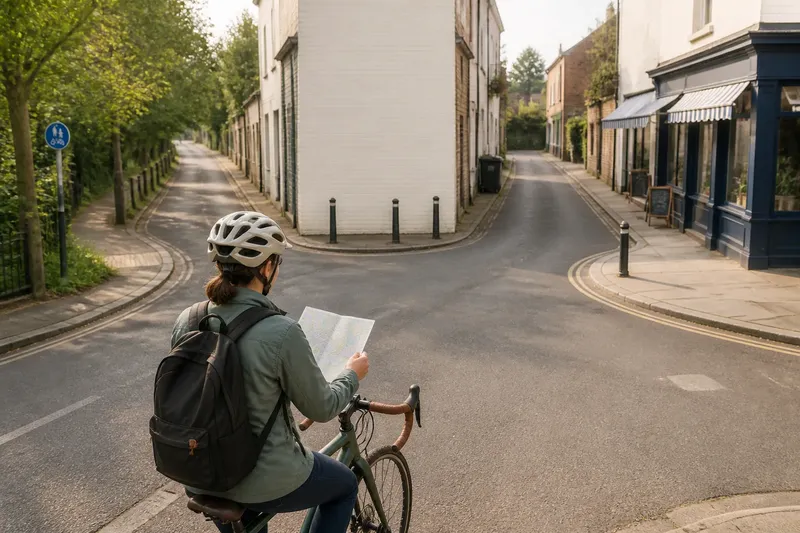
A map can help you compare possible routes, but it cannot show every passing vehicle, temporary obstruction or surface change. Use a local cycling map or council route map where available, then check the route against what you already know. Navigation apps can provide turn-by-turn directions, but treat them as a prompt rather than a substitute for observing the road.
- Check whether the loop adds unfamiliar junctions; if it does, choose a return or pick a simpler loop with clearer turns.
- Check for a busy crossing on the outward and return legs; if you would rather cross it once, look for a route that joins the road beyond it on the way home.
- Check whether a cycle lane ends before a junction; if it does, choose a route with a crossing or street layout you can handle comfortably.
- Check for hills or a surface change on the return; if the climb or rough path would not suit your energy or bicycle, retrace a gentler street.
- Check where the route finishes in relation to your destination; if a loop leaves you on the wrong side of a main road or railway, alter the final section.
- Check for a clear alternative if a path is closed or feels uncomfortable; if none is apparent, favour the simpler route or plan a safe place to turn back.
Which route shape fits the ride?
Is a loop route safer than a return?
Neither shape is automatically safer. Compare the specific crossings, traffic conditions, visibility and path surfaces on each option, and choose the route that feels manageable for you.
How do I choose a route for a short trip?
Choose the shape that makes the essential journey easiest, not the one that adds streets for their own sake. If you are unsure, use a familiar outward route and decide whether to continue a loop at a clear junction.
What should I do if the route feels uncomfortable?
Slow down where appropriate and stop somewhere safe to check your options. You can turn back along a route you know or use a planned alternative; do not make a sudden manoeuvre in traffic to follow a map.
Can I combine a loop and a return?
Yes. You can ride a familiar street to your destination, take a different street for part of the way home, then rejoin a known corridor. This limits new decisions while avoiding one section you would rather not repeat.
Make the finishing point part of the choice
A route is easier to judge when you know where you need to end: at home, near a station entrance or outside a shop with somewhere suitable to secure your bicycle. A loop may bring you back to the start, but its last turn can leave you facing an awkward crossing. A return may be simple to follow yet less convenient if your destination lies on the other side of a one-way street.
When comparing a loop route with a return along the same street, check the final approach as carefully as the outward leg. The best shape is the one that suits the whole journey, including the junctions you will meet and the place where you need to stop.